
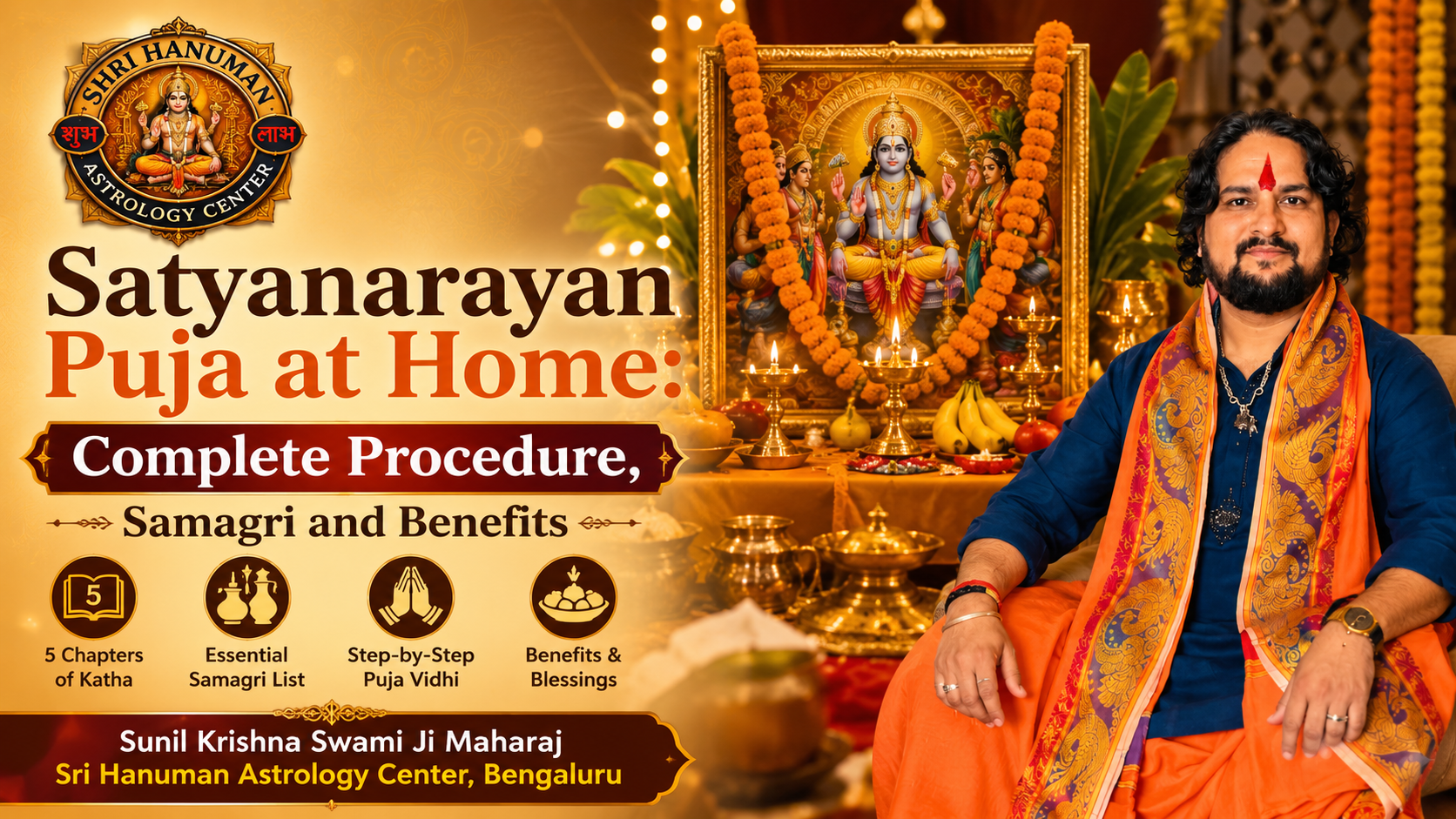
Holding a Satyanarayan Puja at home is one of the simplest and most heartfelt ways to invite blessings into your family. It needs no temple and no elaborate setup, only a clean space, a few devotional items and sincere intention.
This is a practical, step-by-step guide to performing Satyanarayan Puja at home: what to gather, the order to follow, the best time to do it, and the small mistakes that are easy to avoid.
Key Takeaways
- Satyanarayan Puja is designed to be performed at home.
- You need a clean space, basic samagri and the katha book.
- Purnima, the full moon day, is the most favoured time.
- Reading all five chapters of the katha is essential.
- Call a pandit for milestones or if the mantras are unfamiliar.
Can Satyanarayan Puja Be Done at Home?
Yes, Satyanarayan Puja at home is not only possible but traditional, and countless families perform it themselves every year. The ritual is intentionally simple so that any devotee can carry it out with basic preparation and genuine devotion.
You do not need a priest to begin. What matters is a clean and quiet space, the right samagri, and the willingness to follow the sequence with attention. If you would like an experienced priest to lead it, that option is available too, but the puja belongs just as much in a family’s own hands.
What Is Needed for the Puja?
To perform the puja at home you need a dedicated clean space, a chowki for the deity, the samagri, and the Satyanarayan Vrat Katha for the reading. Setting these up before you start keeps the worship calm and uninterrupted.
Choose a spot that can stay undisturbed for a couple of hours, ideally facing east or north. Bathe and wear clean clothes, since personal purity is part of the tradition. Keep everything within reach so you are not searching for items mid-puja. A little preparation makes the whole experience more peaceful.
Satyanarayan Puja Samagri List
The Satyanarayan Puja samagri list is short and mostly made up of common household and devotional items. Gather everything in one place the day before so nothing is missing on the day.
- Wooden chowki and yellow cloth.
- Photo or idol of Lord Satyanarayan.
- Kalash, coconut, mango leaves and banana leaves.
- Tulsi leaves, fresh flowers and a garland.
- Roli, kumkum, haldi, akshat and sandalwood paste.
- Incense sticks, camphor, a ghee lamp and matches.
- Panchamrit: milk, curd, honey, ghee and sugar.
- Bananas and other seasonal fruit.
- Betel leaves, betel nuts and coins for dakshina.
- Prasad ingredients: rava, sugar, ghee, banana and dry fruits.
- The Satyanarayan Vrat Katha book.
Traditions differ, so if your family follows a particular custom for the samagri or the prasad, keep to it.
Step-by-Step Satyanarayan Puja Vidhi
The at-home Satyanarayan Puja vidhi moves from purification and sankalp through the worship and katha to the aarti and prasad. Follow the steps in order for a complete puja.
- Purify and set up. Clean the space, place the yellow-draped chowki, and arrange the samagri.
- Light the lamp and sankalp. Light the ghee lamp, then take the sankalp with your name, gotra and the purpose of the puja.
- Invoke Ganesha. Begin with a short worship of Lord Ganesha to clear obstacles.
- Establish the kalash. Set up the kalash and offer respect to the Navagraha for an auspicious start.
- Worship Satyanarayan. Offer sandalwood, kumkum, flowers, incense, the lamp, panchamrit and fruit to the deity.
- Read the katha. Narrate all five chapters of the Satyanarayan Vrat Katha slowly and with attention.
- Aarti. Perform the aarti with camphor and sing or recite the closing prayers.
- Offer and share prasad. Offer the sheera to the deity first, then distribute it to everyone present.
If you want to understand the meaning behind each stage, our full guide to the Satyanarayan Katha and its significance explains the story and the symbolism in detail.
When Is the Best Time to Perform the Puja?
The best time for Satyanarayan Puja at home is on a Purnima, the full moon day, ideally in the morning or early evening. Full moon days are traditionally considered the most auspicious for this worship.
That said, the puja is flexible. It can also be performed on Ekadashi, on a sankranti, or on any auspicious day tied to a milestone such as a housewarming or a new job. Evening is a popular choice for working families, as it allows everyone to gather. If you are unsure which day suits your occasion, an astrologer can suggest an auspicious muhurat.
Satyanarayan Puja Benefits
The benefits of Satyanarayan Puja are understood in tradition as peace, gratitude and harmony within the family, rather than any assured worldly gain. Performing it at home draws the household together in a shared moment of devotion.
Devotees traditionally associate the puja with a calmer, more positive home, a sense of thankfulness, and blessings sought for wellbeing and new beginnings. These are spiritual benefits held in faith. The puja complements, and never replaces, the practical care you take of your health, finances and family.
Common Mistakes to Avoid
The most common mistakes in a home Satyanarayan Puja are rushing the katha, skipping the sankalp, and leaving before the aarti and prasad. Small lapses in attention are easy to prevent once you know them.
Watch out for these:
- Skipping chapters of the katha. All five are meant to be read in full.
- Forgetting the sankalp. The vow of intention sets the purpose of the puja.
- Missing the Ganesha worship. Ganesha is honoured first, before the main deity.
- Using stale or impure items. Fresh flowers, fruit and clean utensils matter.
- Leaving early. Stay through the aarti and share the prasad with everyone.
- Choosing a day without checking. A quick check for an auspicious day is worthwhile.
None of these require perfection, only care. Devotion offered sincerely is what the tradition values most.
When Should You Consult a Pandit?
You should consult a pandit when the puja marks an important milestone, when you are not confident with the Sanskrit mantras, or when you want the complete traditional vidhi. A priest ensures the ritual is done correctly and frees you to focus on the worship.
For a housewarming, a wedding or a major thanksgiving, many families prefer expert support. You can book an experienced priest through the online puja services or consult Sunil Krishna Swami Ji for advice on timing and arrangements. Whether you perform it yourself or with guidance, a Satyanarayan Puja at home is a beautiful act of family devotion.
FAQs
1. Can I do Satyanarayan Puja at home by myself?
Yes. The puja is designed to be performed at home with basic samagri and sincere devotion. A pandit is optional and mainly helpful for milestones or when the mantras are unfamiliar.
2. What samagri is needed for the puja at home?
You need a chowki and yellow cloth, a photo of Satyanarayan, a kalash, panchamrit, tulsi, flowers, a ghee lamp, fruit, and prasad ingredients such as rava, sugar, ghee and banana.
3. What is the best time for Satyanarayan Puja at home?
A Purnima, or full moon day, is most auspicious, and morning or early evening works well. It can also be done on any auspicious day chosen for a milestone.
4. Is fasting necessary for the puja?
Many devotees keep a light fast until the puja is complete as a mark of devotion, but customs vary by family and tradition. It is a matter of personal faith.
5. What are common mistakes to avoid?
Rushing or skipping chapters of the katha, forgetting the sankalp, missing the Ganesha worship, using stale items, and leaving before the aarti and prasad.
6. When should I call a pandit for the puja?
Call a pandit for a milestone event, when you want the full traditional vidhi, or if you are not comfortable with the mantras and sequence.